What Adoptive Parents Need to Know About Attachment, Regulation, and Children Who Have Learned Not to Trust

Dr. Hilary Claire is a clinical psychologist, holistic parenting mentor, author of the Vibrant Mamas book series, and host of the Wild and Well podcast. Her work blends nutritional and environmental medicine with evidence-based psychology to support parents navigating the hardest parts of raising children. In this episode of Voices of Adoption, she joins Donna Pope to discuss what adoptive families need to understand about attachment, regulation, and showing up consistently for kids who have learned not to trust.
What Secure Attachment Actually Looks Like
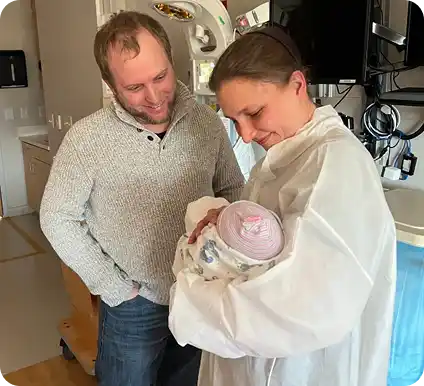
Attachment is not a feeling. It is a pattern of behavior, one that develops through repeated, consistent responses from a caregiver over time. Secure attachment forms when a child learns that their parent will return when they leave and will be there when something feels wrong. According to a large-scale meta-analysis published in Psychological Bulletin examining data from over 20,000 infant-parent pairs, just over half of children in general populations develop secure attachment, with the remainder showing avoidant, resistant, or disorganized patterns. For children adopted after their first birthday, a separate meta-analysis found they showed significantly less attachment security than non-adopted peers, with an effect size of 0.80, a meaningful gap that reflects the real complexity adoptive families are navigating from day one.
Dr. Hilary Claire is clear that insecure attachment is not a verdict. It is a starting point. Research from the PMC confirms that most children placed in adoptive homes consolidate new attachment bonds within a few months, and that attachment security is considerably higher among adopted children than among children remaining in maltreating or institutional settings. The brain is plastic. Relationships can change. But the work has to start with the parent.
The Parent Has to Regulate First
One of the most consistent findings in attachment research is that a parent's own emotional regulation directly shapes their child's capacity to regulate. A PMC study examining co-regulation patterns found that predictable positive parenting interactions are associated with children's better self-regulation outcomes, while coercive or unpredictable patterns undermine the very skills children need to manage big emotions. For adoptive parents, this matters especially because many of the children they are raising come from backgrounds of chronic unpredictability.
Dr. Hilary Claire describes this plainly: the moment a child says something that cuts deep is not the moment to work on emotional regulation. It is too late. The nervous system has already shifted into a reactive state. The work happens in ordinary moments, between crises. It starts with a simple practice: pausing throughout the day and asking, what am I feeling right now? Many of her clients set a reminder on their phone or a sticky note on the fridge. The question itself is the training.
Separating the Child from the Behavior
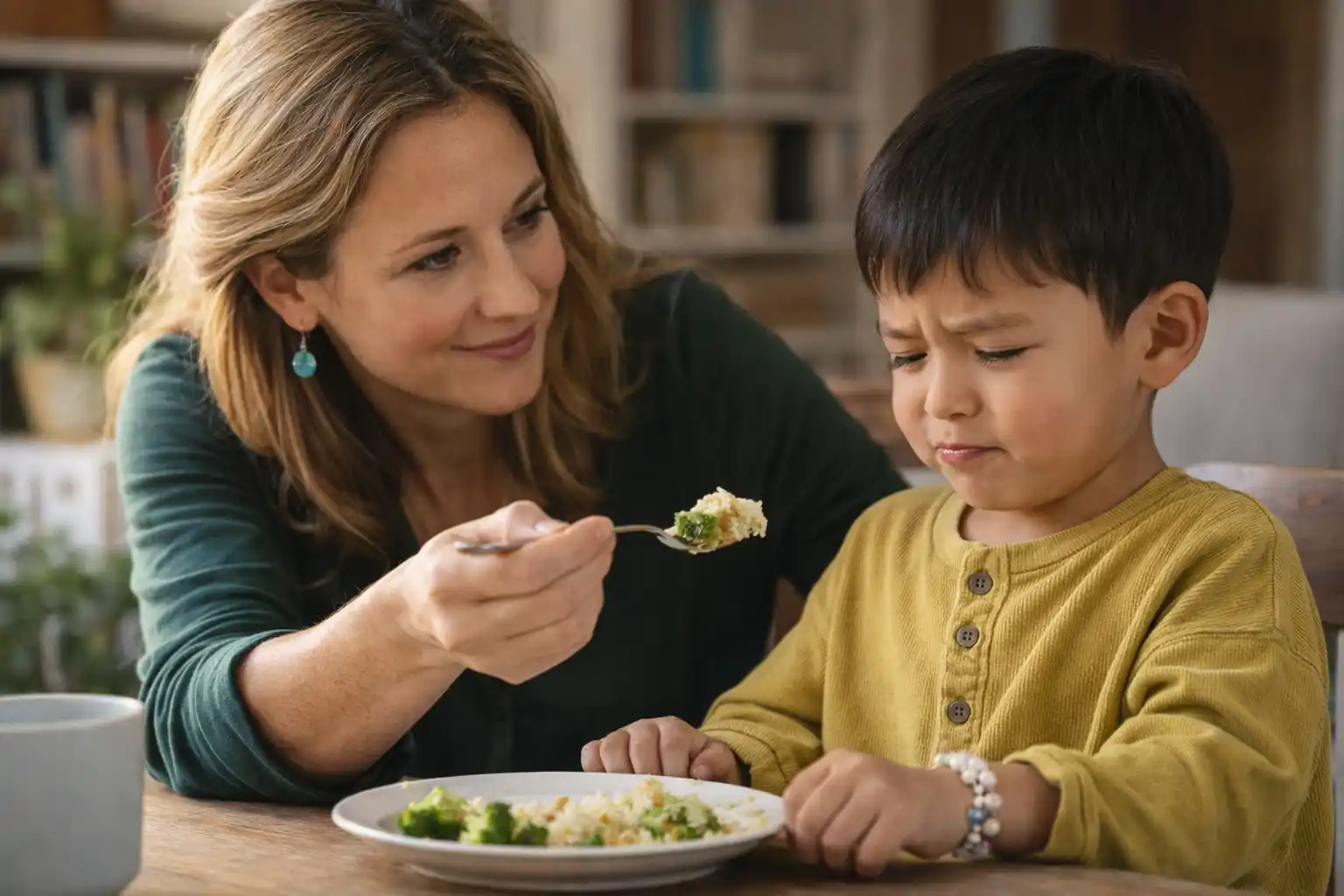
Children who come from foster care or early trauma often display behaviors that feel like rejection: destroying property, pushing caregivers away, testing limits to the point of exhaustion. A PMC study on adoptees' behavioral trajectories found that preadoptive adversity, including age at placement and number of adverse childhood experiences, was associated with higher internalizing and externalizing scores, but that warm, consistent post-adoptive parenting significantly reduced those trajectories over time.
Dr. Hilary Claire explains that these behaviors are not manipulative. They are survival strategies. Children who have moved through multiple placements have learned that people leave, and they are simply confirming what they believe to be true. The intervention is not a clever response to the behavior. It is staying. Separating the child as a person from what the child is doing in a given moment, saying clearly that this behavior stops here and that they are still loved and part of this family, is the framework that builds the trust these children have never had.
What Good Enough Parenting Actually Means
Research from Lehigh University, published via ScienceDaily, found that caregivers need to respond to their child's attachment needs in a way that gets the job done roughly half the time to support secure attachment development, a finding that directly contradicts the myth of the perfect parent. Dr. Hilary Claire references similar research in the episode: the goal is not flawless attunement. It is a consistent presence. Apologizing when you respond in ways you are not proud of, naming it, and restarting. These teach children far more than getting it right every time.
For adoptive parents who carry the weight of loss, longing, and years of hard work before placement, the pressure to be a perfect parent is especially heavy. Dr. Hilary Claire's prescription is the same one she applies to herself: eat well, sleep enough, find a therapist, work through your own patterns. Not because self-care is a luxury, but because it is the only way to be consistently available to a child who needs you to stay.
Definitions
Secure attachment refers to the bond formed when a child trusts that their caregiver will be available and responsive when needed. It is associated with better emotional regulation, social competence, and long-term mental health outcomes.
Insecure attachment describes patterns such as avoidant, resistant, or disorganized attachment in which a child does not have reliable confidence in caregiver availability. It is more common in children who have experienced early adversity, neglect, or multiple placement changes.
Emotional co-regulation is the process by which a caregiver's regulated state helps a child move from distress back to calm. It is the foundation of a child's developing self-regulation capacity and cannot be shortcut.
Adoptive parents are doing some of the most important and least supported work in parenting. Dr. Hilary Claire's message throughout this episode is not that it should be easy. It is that it is possible, it takes time, and it starts with you. Learn more about Dr. Hilary Claire at drhilaryclaire.com and listen to her podcast Wild + Well wherever you stream. Subscribe to Voices of Adoption at VoicesofAdoption.org to hear every episode as it releases.
#Adoption #AdoptiveParenting #Attachment #FosterCare #VoicesofAdoption #SecureAttachment #ParentingSupport #MentalHealth #AdoptionCommunity #TraumaInformedParenting
Follow or Subscribe to Voices of Adoption on your favorite platform -
Website: VoicesofAdoption.org | YouTube: @VoicesofAdoptionShow | Twitter/X: Voices_Adoption | Instagram: Voicesof_Adoption | Facebook: Voices of Adoption | TikTok: @Voices_of_Adoption | LinkedIn: @Voices-of-Adoption
Follow Nathan Gwilliam - LinkedIn: @nathangwilliam
Follow Donna Pope - LinkedIn: @donna-pope-41652ba
Follow Dr Hilary Claire - Website: @drhilaryclaire | Instagram: @drhilaryclaire | Podcast: @wildandwellpodcast | Facebook: @drhilaryclaire